






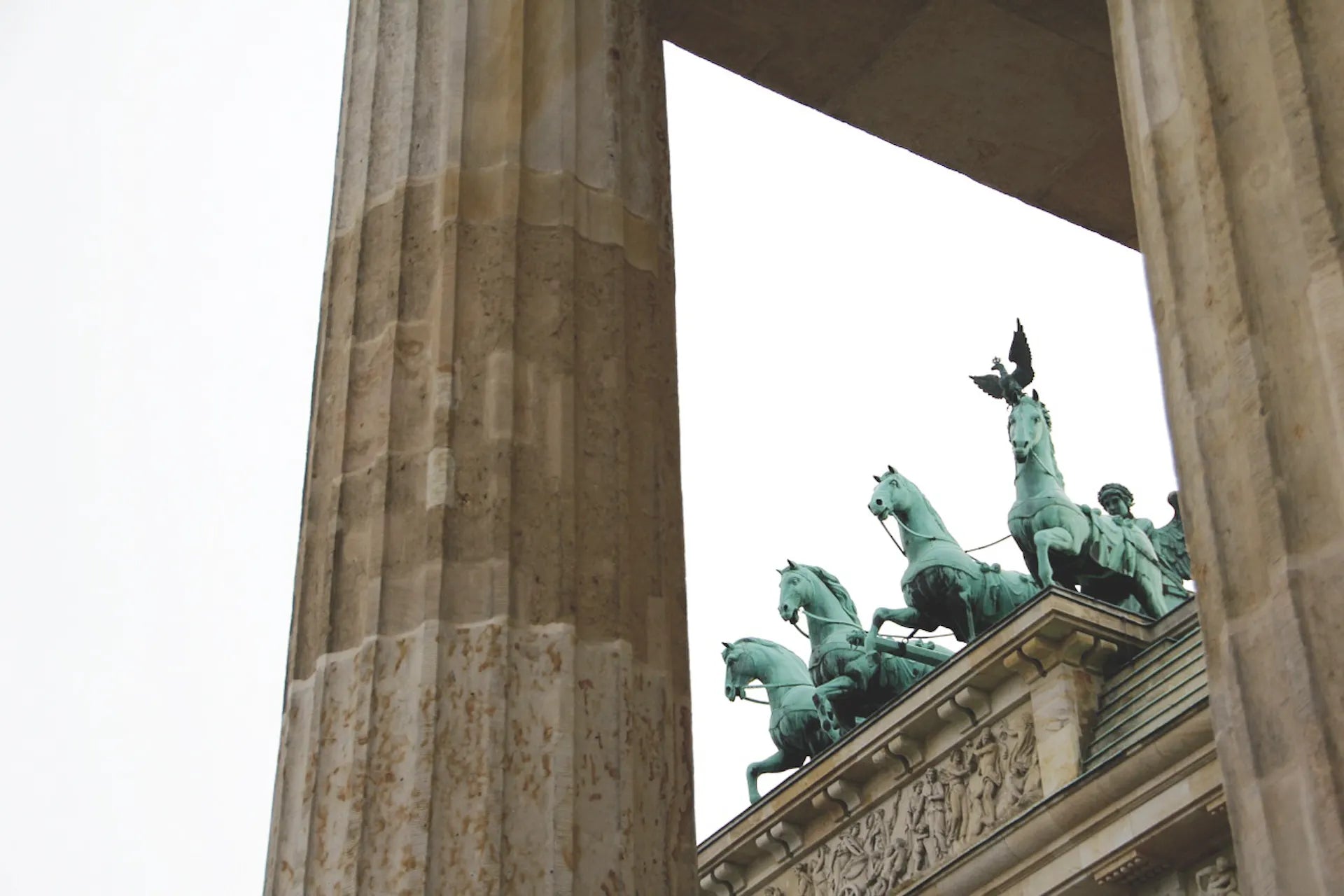
It’s as much a part of the capital as the TV Tower and the “ Currywurst.” Located between the boulevard Unter den Linden and Straße des 17. Juni, the “ Brandenburg Gate ” stands in the heart of Berlin—and serves as a silent witness to the city’s exciting history. We’ll tell you why the “ KPM Berlin ”high also appears at the top of the gate.
What does the Quadriga have to do with " KPM Berlin "?
WHAT DOES THE QUADRIGA HAVE TO DO WITH KPM BERLIN ?
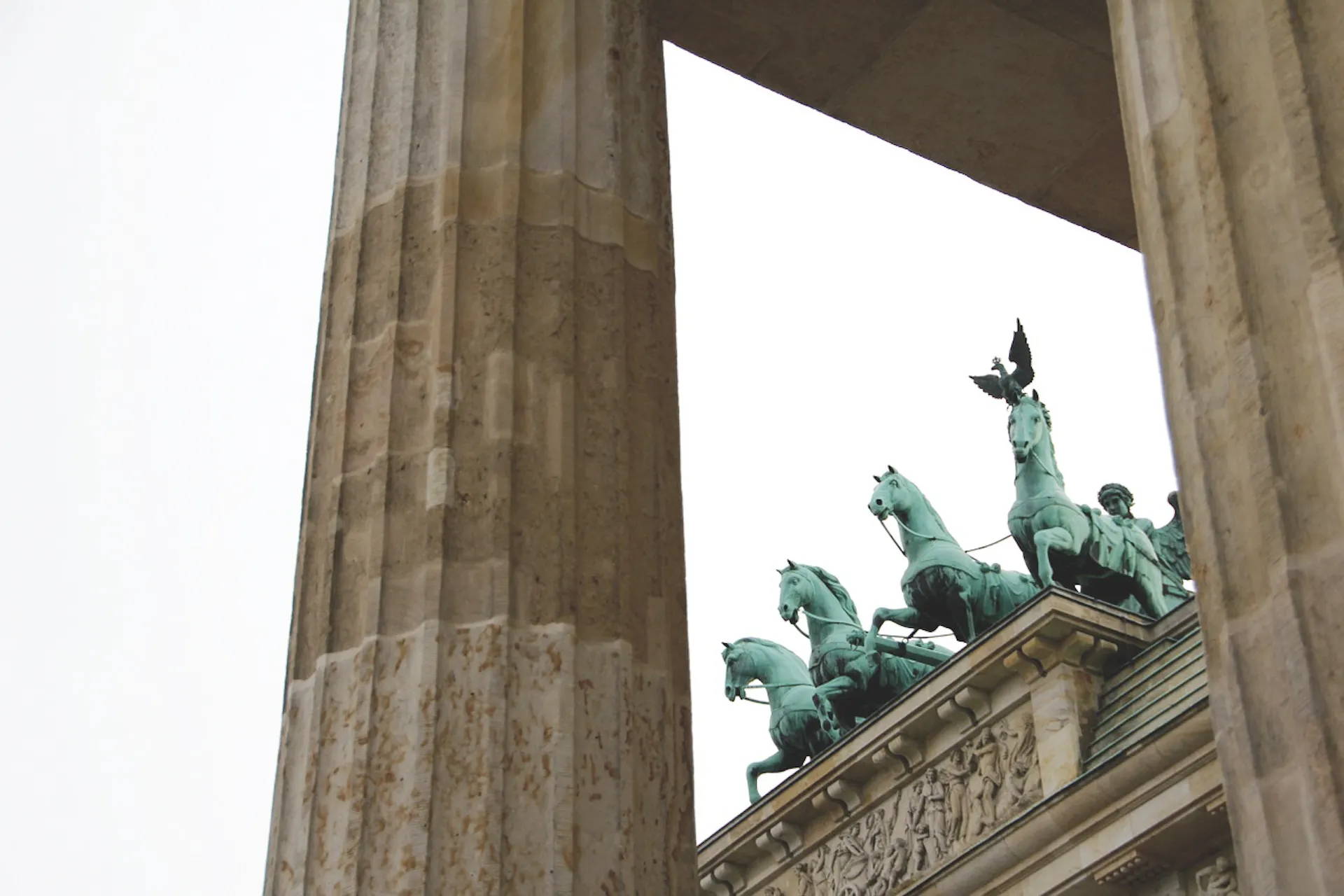
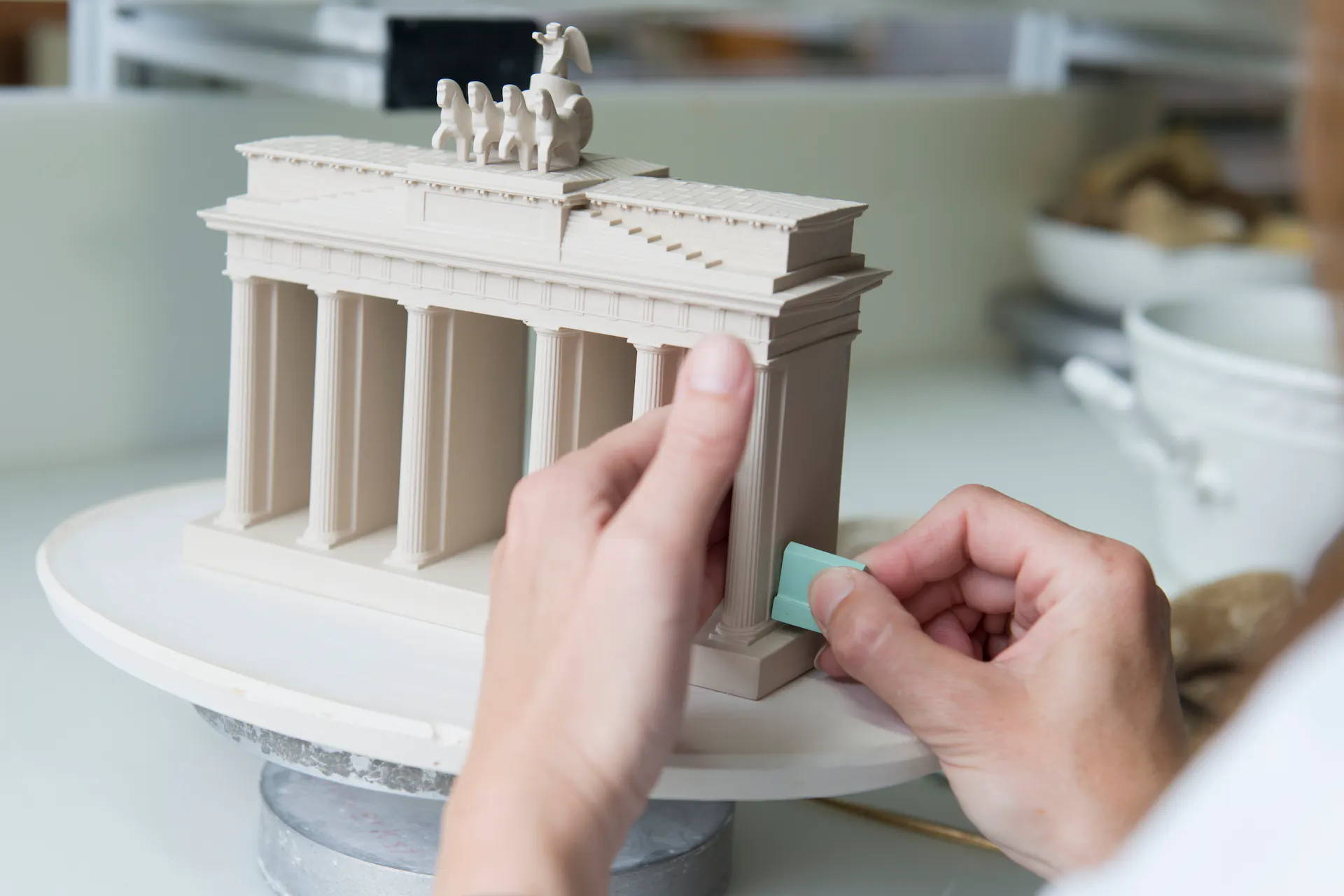
Did the Prussian King Friedrich , Wilhelm II, have any inkling that the early-Classical Triumphal Gate would go down in history as Berlin’s most famous landmark and a national symbol? When he had it built in 1789 based on designs by Carl Gotthard Langhans, he could not have foreseen the many historical events of the 19th and 20th centuries that are inextricably linked to the structure. The quadriga crowning the gate holds particular symbolic significance. The work, based on a design by the sculptor Johann Gottfried Schadow, depicts Victoria, the goddess of victory, bringing peace to the city atop a four-horse chariot—a peace that was often fleeting, a fact that also left its mark on the “ Brandenburg Gate .” Destruction caused by wars, reconstruction, and restoration were not uncommon.
Prussian all-rounder
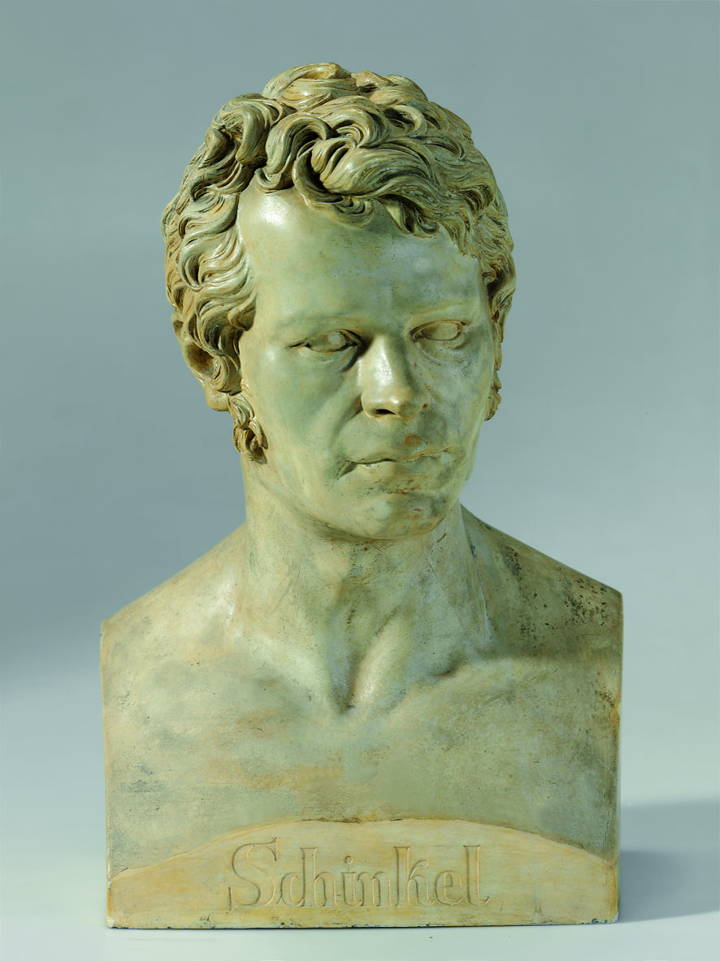
And so it came to pass that in 1814, the victory symbol was replaced by a design by Karl Friedrich Schinkel. The architect crowned the Victoria column with an oak wreath enclosing an Iron Cross, atop which sits an eagle with outstretched wings. And it is precisely this artist who links the Quadriga to KPM. For Karl Friedrich Schinkel not only had a lasting influence on the architecture of classical Prussia. The multi-talented artist was also active in the fields of interior design, design, and painting—and achieved outstanding results in these areas.
Design for eternity
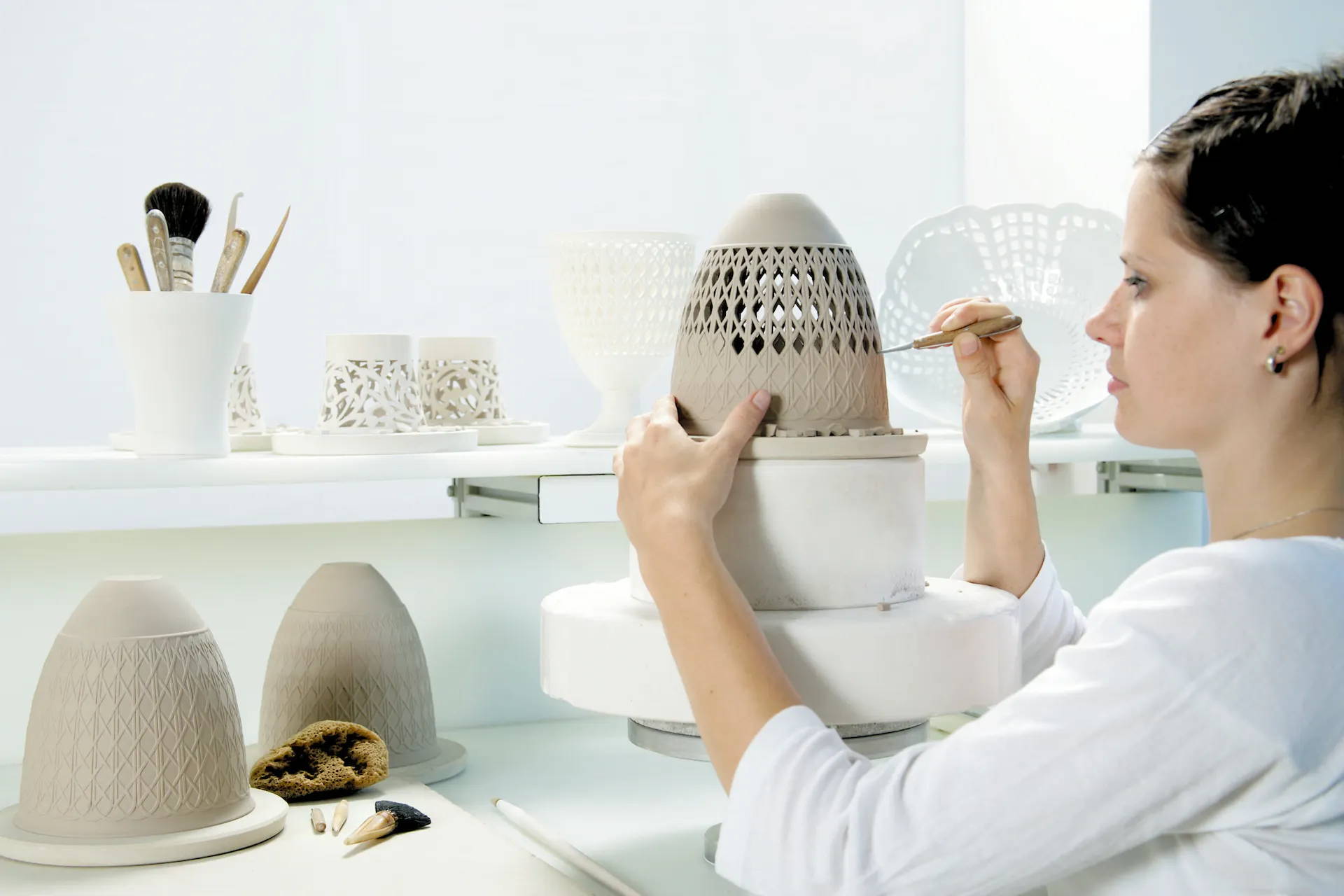
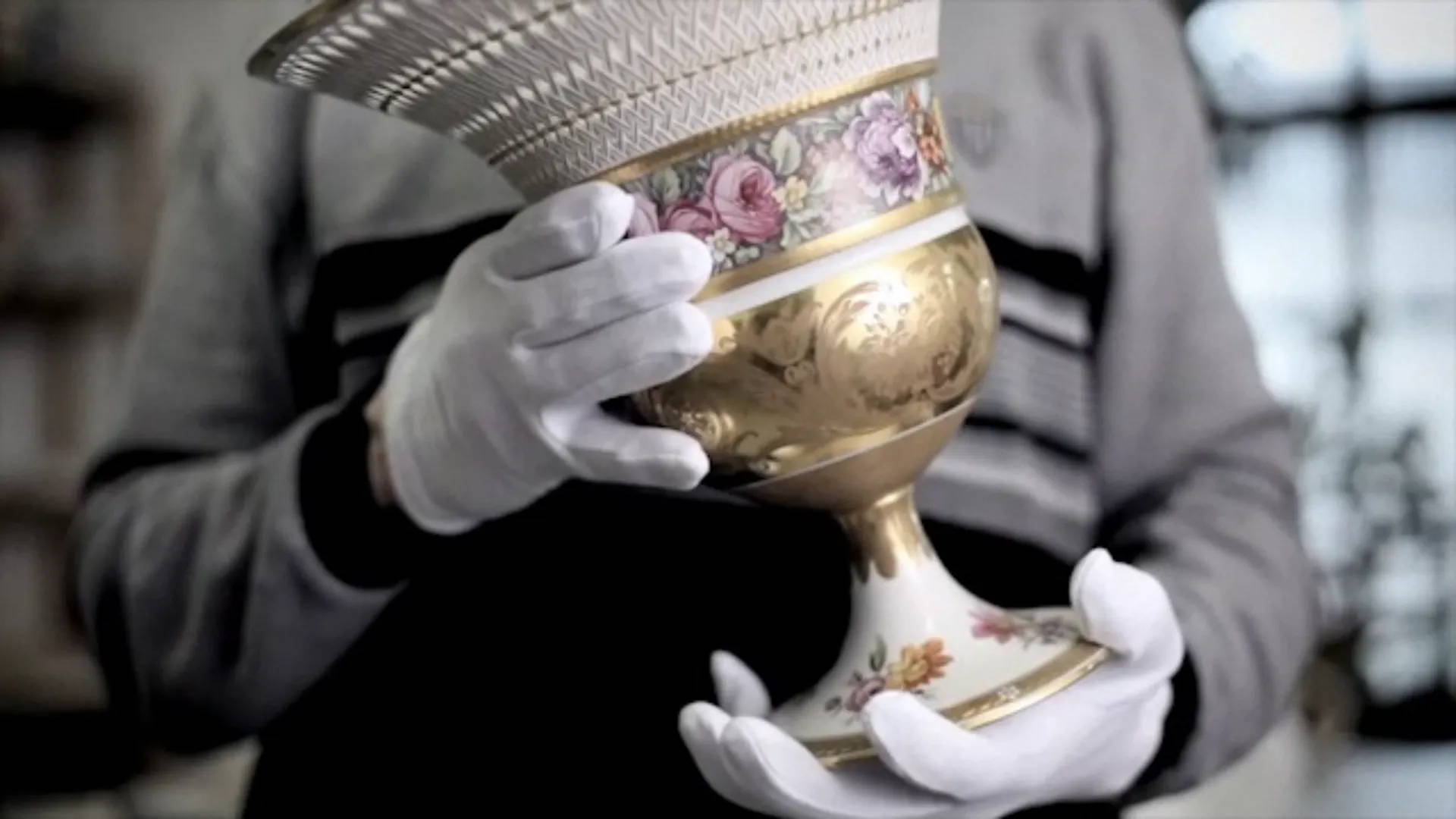
Schinkel's clear design language and his departure from the sweeping curves of the Baroque were in line with the Prussian Enlightenment. A treasure trove of models was created for KPM based on his designs, which have lost none of their significance to this day. In 1810, for example, he designed an ANTIQUE SUGAR BASKET for the Prussian Queen Luise, which, with its 2272 individual, hand-crafted cuts, is a showpiece of classicist porcelain baskets. Or the vase that has become a classic with its slim, straight vase body TROMPETENFORMwhich is harmoniously accentuated by a flared base and a protruding lip.
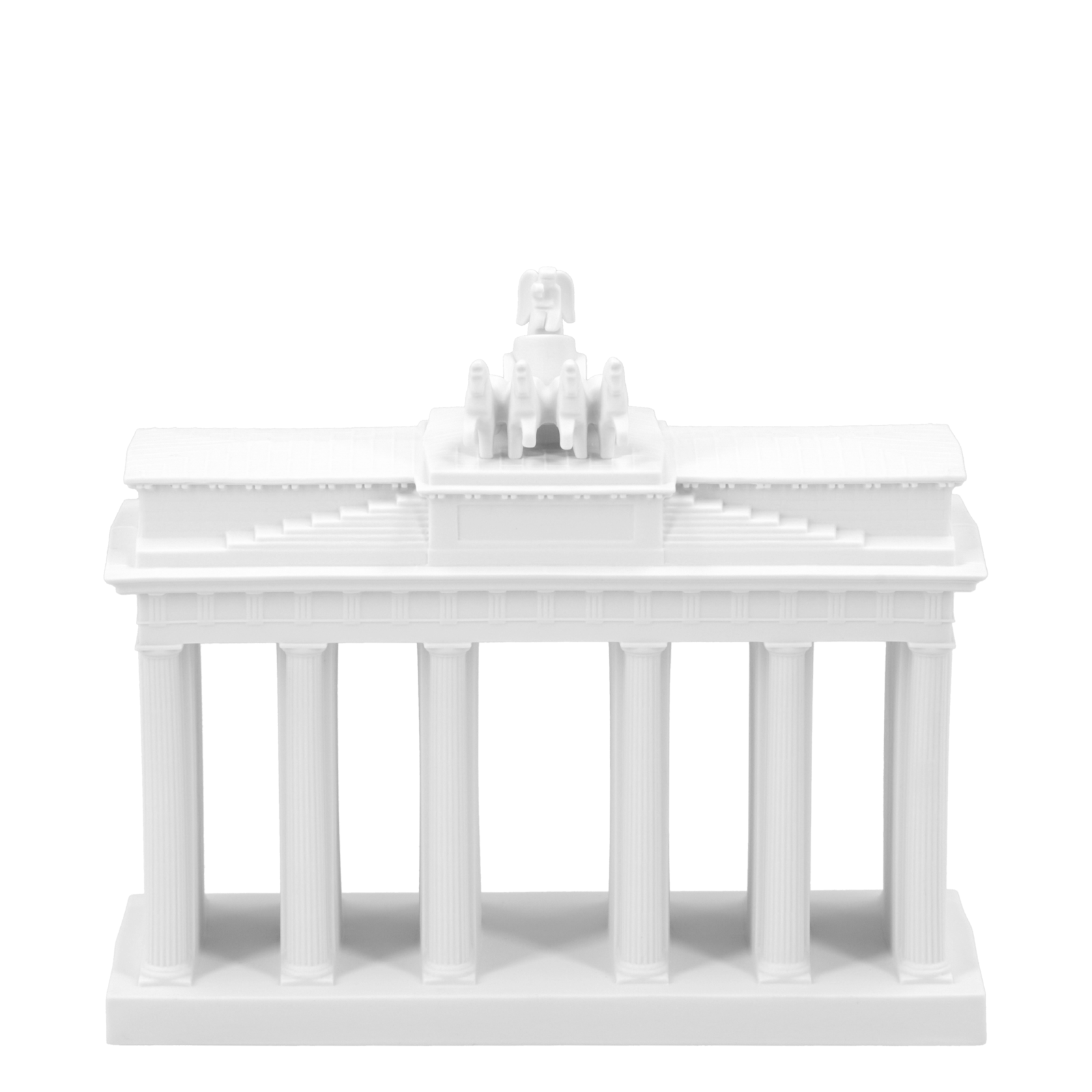
Plastic Brandenburg Gate
695,00€
Would you have thought that KPM could also be found on the Brandenburg Gate ? In our long history, there are many such interesting facts that express the close connection between the manufactory and the city. For example, would you like to know why the Berlin radio tower stands on KPM porcelain stands? Have fun unraveling the next mystery!
Share
Read more

All Eyes On: Mark Braun
ALL EYES ON: MARK BRAUN Artisanal skill and a commitment to the highest quality. These two qualities are what define the Königliche Porzellan-Manufaktur and industrial designer M...
I am looking for a challenge
"I'M LOOKING FOR A CHALLENGE" As chief designer at the Royal Porcelain Manufactory, Thomas Wenzel has been developing products for nearly 30 years that are intended to preserve tradition and...