






Hardly any other tableware set embodies the understated elegance of Prussian Rococo better than NEUZIERAT by “ Friedrich ” Elias Meyer, dating from 1767. That is why it soon became a favorite among the 21 tableware sets that “ Friedrich ” the Great commissioned from the Royal Porcelain Manufactory in Berlin.
NEUZIERAT: Frederick the Great's favorite floral service
NEUZIERAT: THE FLORID FAVORITE SERVICE OF FRIEDRICH THE GREAT
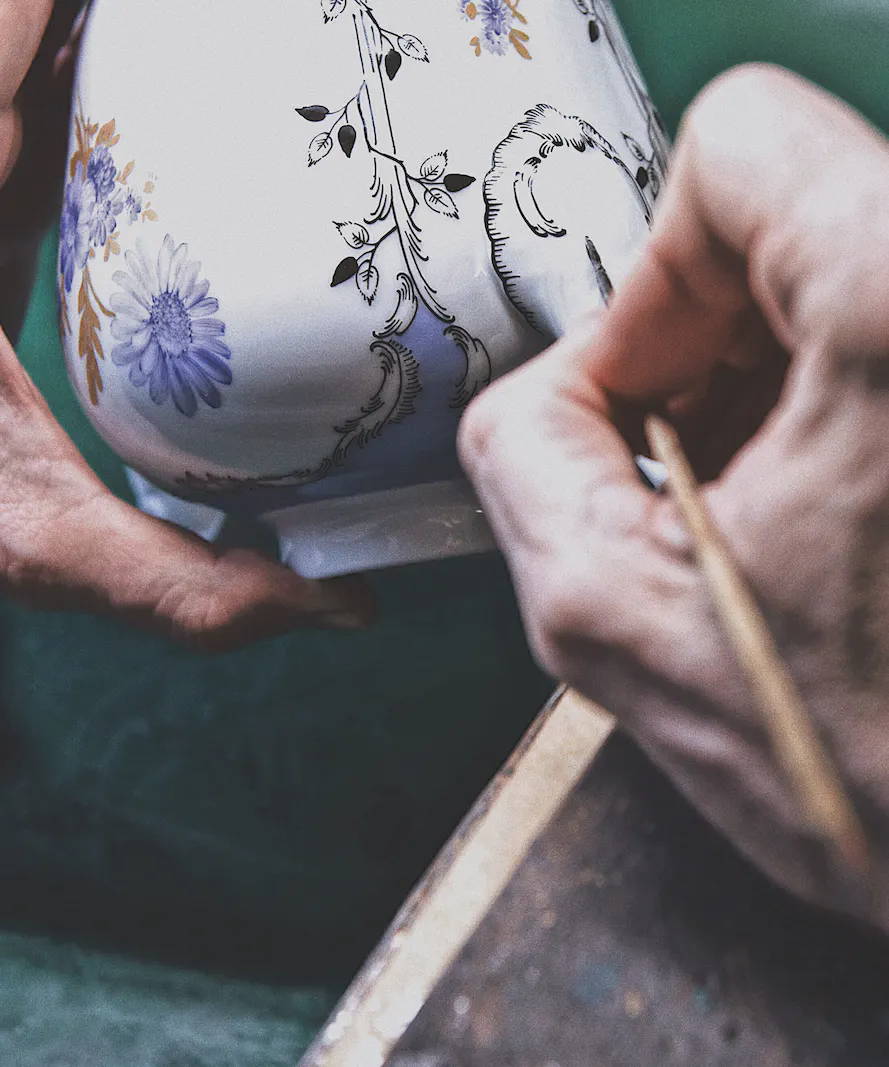
Königliche Porzellan-Manufaktur Berlin preserves its art-historical heritage by keeping the forms and designs of bygone eras alive, thereby upholding the tradition of European art history. We would like to introduce you to the tableware sets that European royal families used over 250 years ago and that today—a quarter of a millennium later—have lost none of their charm.
To start, we'd like to introduce you to NEUZIERAT, the Big Guy's favorite service at Friedrich .
The art-loving monarch of the Rococo period
When Friedrich , the Great, took over the Berlin Porcelain Manufactory in 1763, his goals were not solely of a business nature. Friedrich II loved and collected fine porcelain. He had a particular fondness for the beauty of the material, for elegant Rococo forms, and for artful painted motifs. Friedrich’s goal was always to produce items that met the highest standards in every respect, both artistically and technically.
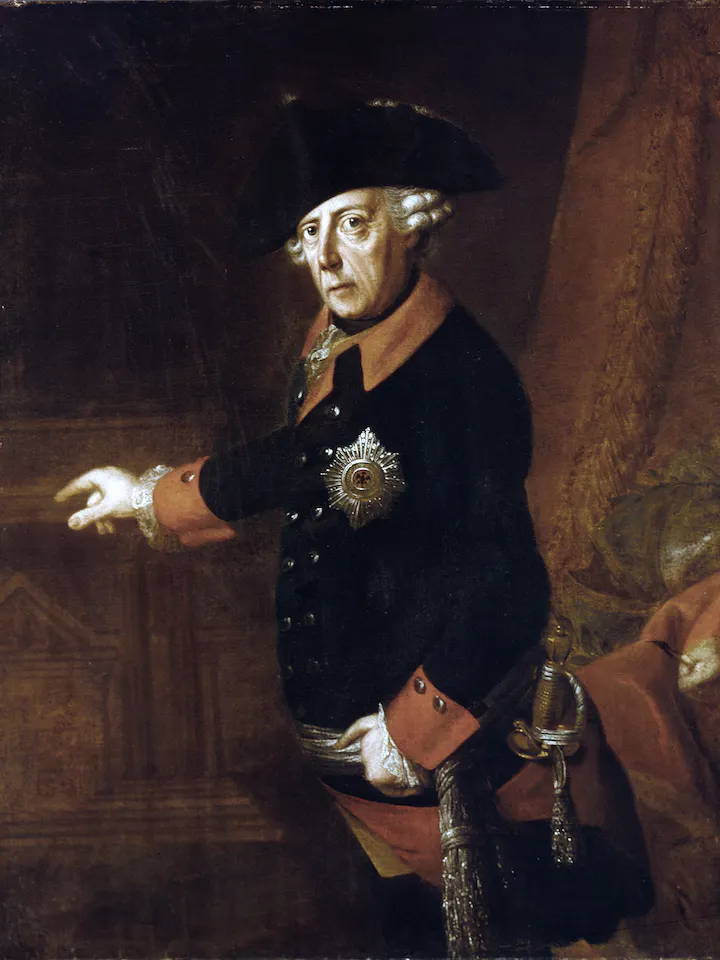
Ironically, he liked to call himself his best customer and ordered 21 Rococo-style porcelain services for his palaces alone. It is therefore not surprising that he always wanted to be involved in the design of most Rococo services himself. Frederician Rococo was clearly inspired by the French way of life.
Restrained elegance in the spirit of Prussian rococo
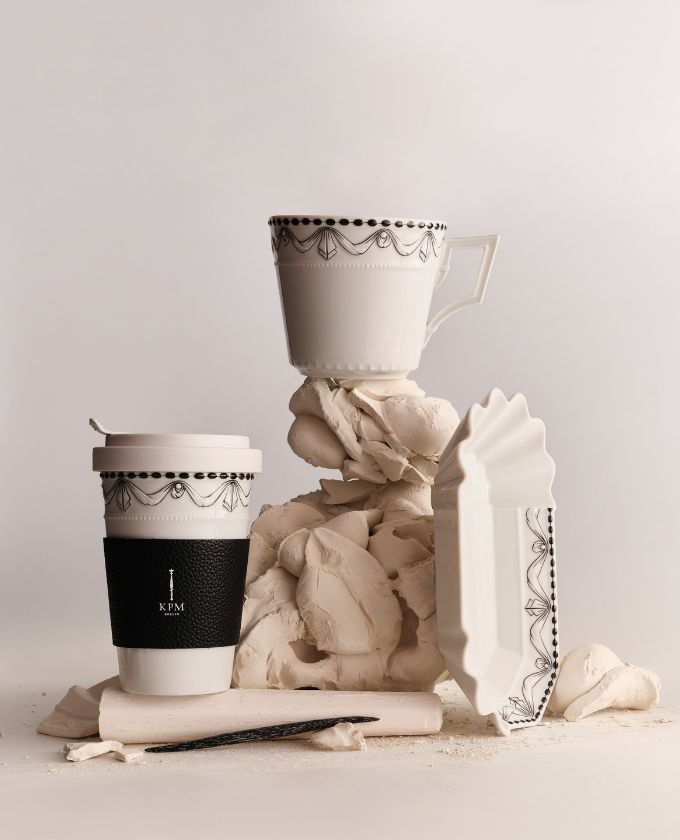
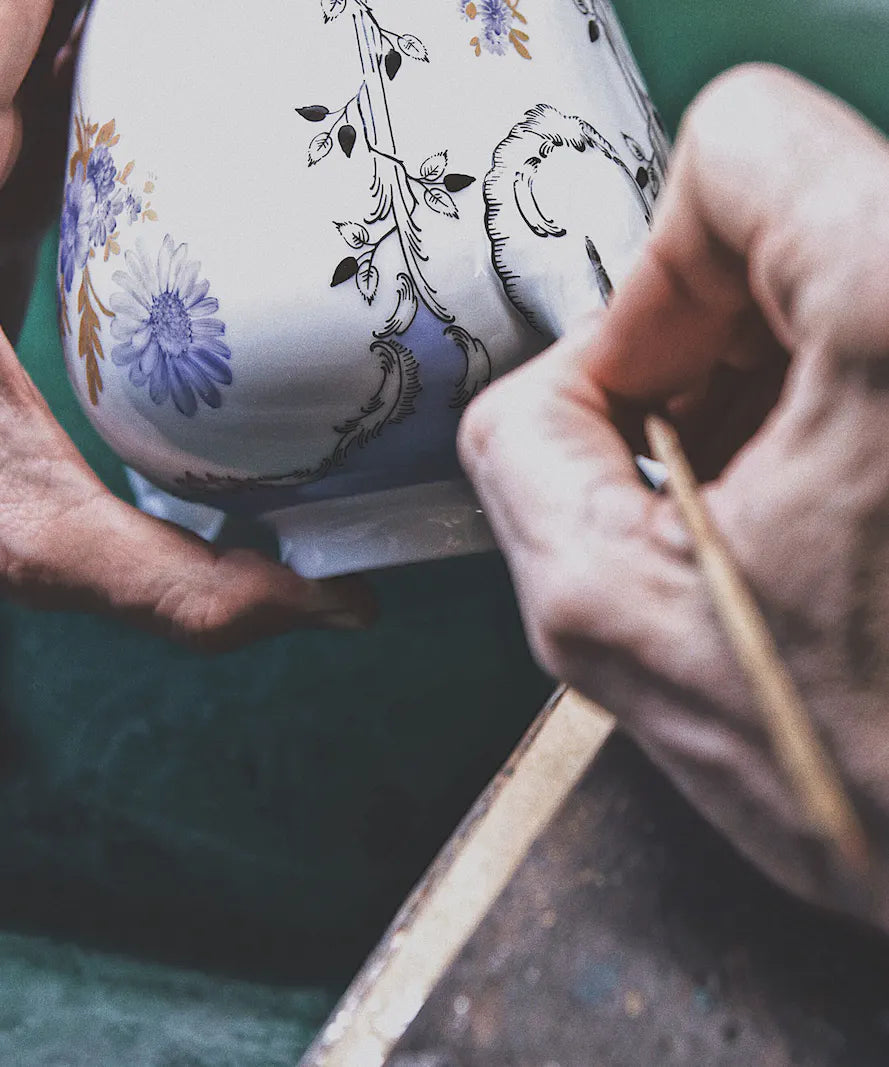
The NEUZIERAT, designed by Elias Meyer of Friedrich —the manufactory’s first master modeler—lent an elegant touch to the comparatively simple Prussian Rococo style on the white gold of the KPM Berlin and was heavily inspired by the RELIEFZIERAT form, also crafted by Elias Meyer of Friedrich in 1765. The handle design is identical for both services. The relief decoration—comprising rods and rocaille motifs entwined with leaf tendrils—is in perfect balance with the smooth surfaces, which offer ample space for a wide variety of decorative motifs.
Bleu Mourant becomes an often quoted saying of the Berliners: when they feel unwell, as tired as this blue, they get all "blümerant".
The king had a particular fondness for a very specific shade of “ decor.” He waited a long time for the chemists in the laboratory of the Berlin manufactory to successfully mix that delicate gray-blue hue that he loved so much and with which he so enjoyed surrounding himself at Sanssouci. It ultimately took seven years before success was achieved in 1782. The famous “Bleu mourant” of the “ KPM Berlin ” was born and remains a closely guarded secret of the KPM laboratory to this day.
Share
Read more
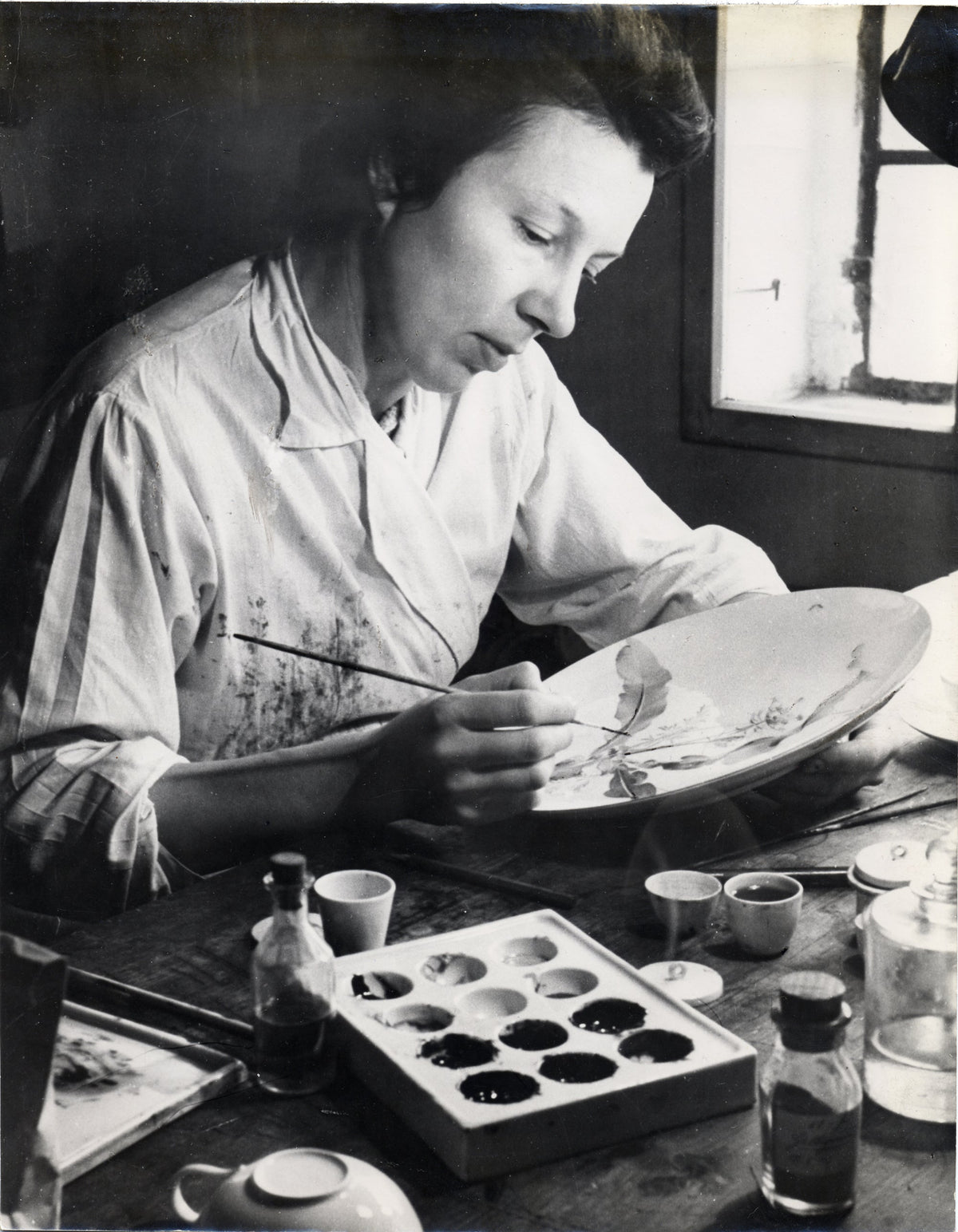
Trude Petri and the " KPM Berlin " — A Success Story
TRUDE PETRI AND THE KPM BERLIN Sculptor, painter, and designer—Hamburg-born Trude Petri is one of the most important artists of her time. Proof of this success story...
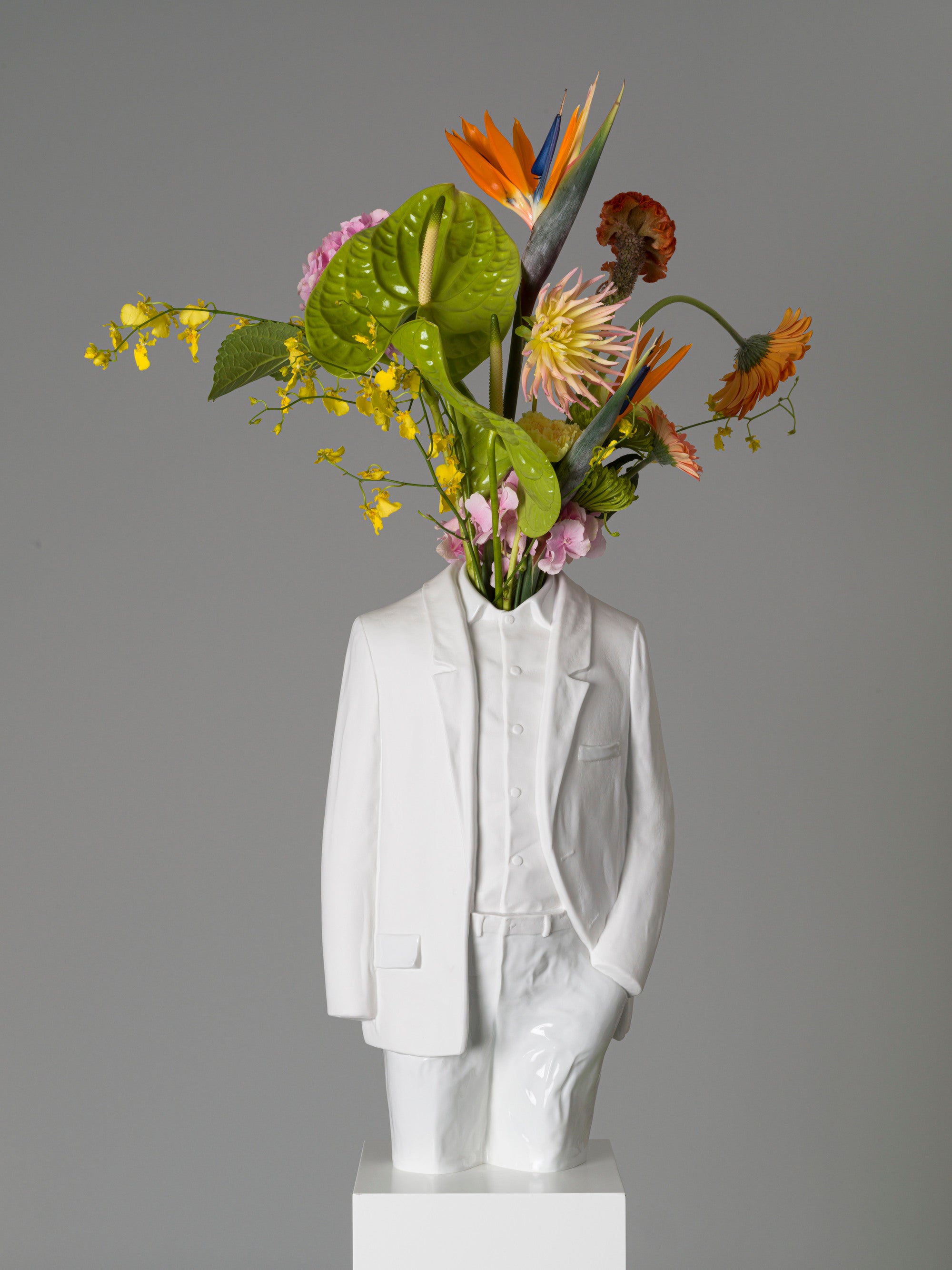
Interview with Erwin Wurm
ME WITHOUT ME Erwin Wurm is the most significant Austrian artist of our time. He has now created a torso for KPM that is part Donald Duck, part himself ...